Getting started with public speaking in tech
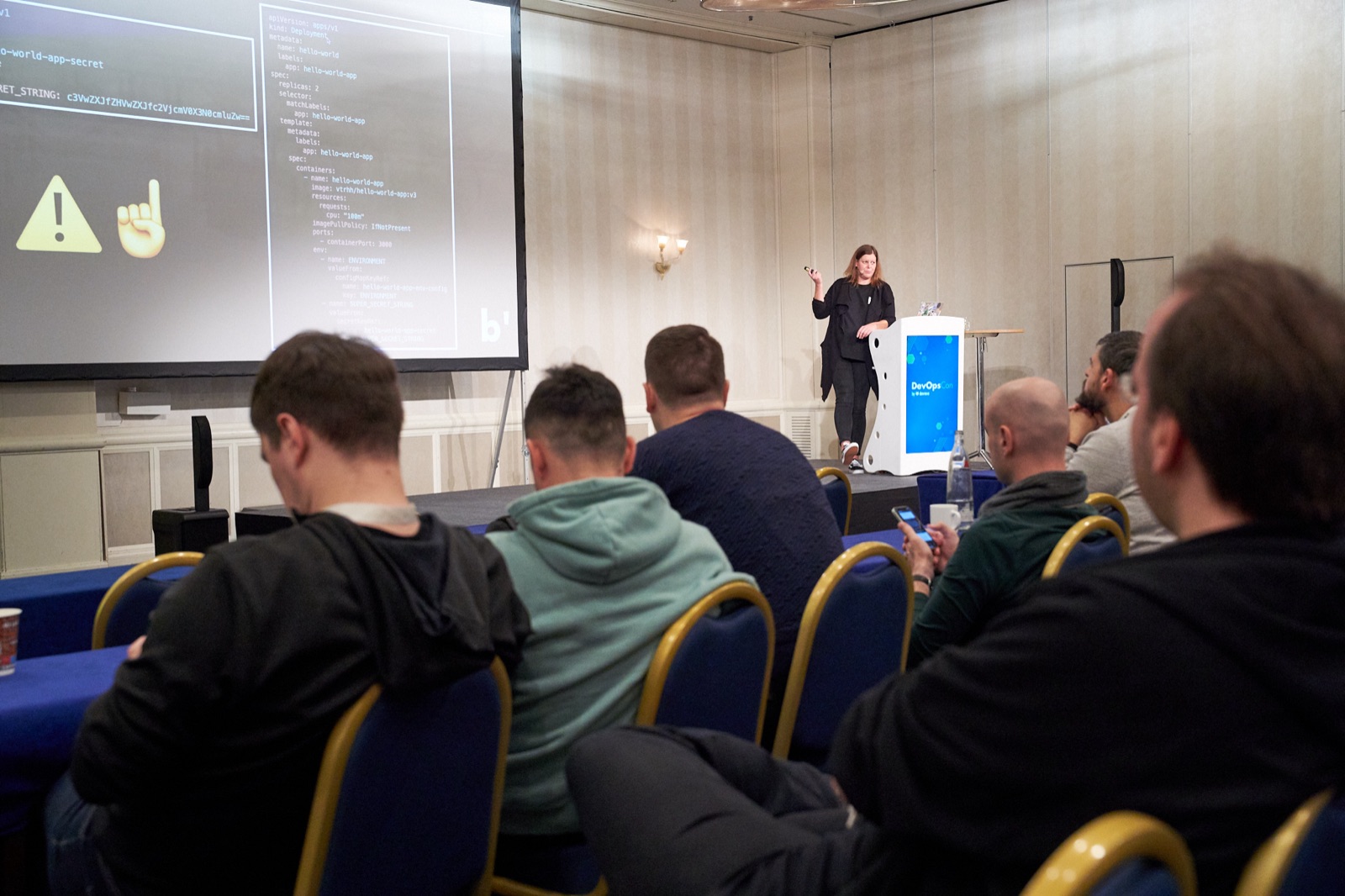
I never planned to become a public speaker in tech - it somehow happened. And over the past years, that turned into speaking and moderating at conferences and meetups across the Cloud and DevOps community. From local events to stages like code.talks or KubeCon Europe, I’ve shared experiences around cloud infrastructure, Kubernetes, mentoring, and growing in tech.
And somewhere along the way, public speaking stopped being something “special” - and became more and more something I simply do.
It didn’t start with confidence
Looking back at my early talks, especially during my transition from HR into tech, one thing is clear: I was not speaking as an expert. I was speaking as someone actively learning.
Coming from HR, I had years of experience in my domain - recruiting, hiring, organizational topics. That felt natural. But when I moved into software engineering and cloud computing in 2021, I was suddenly in a field where I was a novice again. So at first, speaking about it felt strange. Not because I didn’t want to share - but because I didn’t yet feel “ready enough”.
One of my bosses at that time encouraged me to give workshops and talks - and so I started. What changed then for me is pretty simple: I stopped seeing speaking as something reserved for experts, and started seeing it as a way to reflect on what I was learning. And that turned out to be enough.
Public speaking is not one thing
One thing that became clear over time: “public speaking” is not a single skill. It’s a mix of very different formats:
- Talks → structured knowledge sharing
- Workshops → hands-on learning and guiding others
- Moderation → enabling engagement
- Panels → balancing perspectives in real time
A workshop in Hamburg where you guide people through Kubernetes basics feels completely different from moderating a panel at KubeCon Europe in Amsterdam or hosting a community conference. So each of these requires a slightly different mindset. And not each of them might be your cup of tea - and that is completely fine.
What all of them have in common for me: I am nervous beforehand. And I think this is part of the game - if you are nervous, it’s also important to you.
What years of speaking taught me
Looking back across meetups, conferences, workshops, and panels, a few patterns have consistently shown up.
You don’t need to “arrive” before you start speaking
Many of my talk are based on things I had just learned myself. For example: giving a Kubernetes 101 workshop 3 months after starting with it myself. Or explaining how to build a Kubernetes cluster on Pis after doing it for the very first time with little Linux skills only. Or giving tips and tricks for mentoring junior engineers derived from my HR experience and being mentored as a junior in tech myself.
None of these came from decades of expertise. They came from doing the work and reflecting on it. And that is often more valuable than polished theory.
And btw: For my Pi talk, most attendees actually had far more experience with Linux and Pis than I did. But they came for the story - and for sharing experiences. I had wonderful conversations afterwards and got plenty of valuable tips, too :) Which brings me to my next point…
You learn as much as you teach
Whether it’s a workshop on Kubernetes basics or a talk about mentoring junior engineers, I always leave with new perspectives. People ask questions you didn’t anticipate. They challenge assumptions. They connect ideas in ways you didn’t expect.
That feedback loop is one of the most valuable parts of speaking.
The community is the real safety net
Across meetups, conferences, and workshops - from DevOpsDays to DevFest to smaller local groups - one thing has been consistent: The tech community is incredibly supportive.
People don’t show up to judge you. They show up to learn with you. Especially in meetup environments, that support makes it much easier to grow into speaking without feeling like you need to perform perfection.
And yes, I admit, there are some people asking weird questions or behaving unpolite. But this happens so rarely, you should not anticipate it.
Repetition matters more than “the perfect talk”
The first version of a talk is rarely the best one. But repeating it across different contexts - a meetup, then a small conference, then a bigger one - is where the real improvement happens.
Many of my talks evolved over time. While keeping the core idea, I adapted them to different audiences, improved the structure, or found better examples. From time to time also insights or questions from the audience shaped the talk further.
So, speaking is iterative, not one-and-done. This also makes preparing a talk way more efficient - not just giving it once, but several times. And if you are worried: It’s comepletey OK for program committees at conferences if not every talk is being held for the very first time. Experienced speakers often give talks at several conferences within one year - and might bring them back on stage, adapted, a few years later.
For anyone starting out: here’s what I’d say
If you’re thinking about getting into public speaking in tech but hesitate, here are a few things that helped me - and that still hold true today. Maybe they can help you. :)
Start with what you are actively working on
The easiest topics are the ones you are already in the middle of. Not the ones you “should know”, but the ones you are currently figuring out:
- a tool you just adopted
- a concept you recently struggled with
- a project you built or broke and learned from
Your “fresh” perspective is valuable because it’s close to the real learning curve.
Don’t wait until you feel like an expert
This is the trap I see most often - and the one I fell into myself.
Especially as a career changer, I often felt (and still feel) that everyone else around me knows more, has more experience, or somehow belongs there more naturally than I do. Public speaking can amplify that feeling even further.
But over time, I realized that many experienced engineers feel exactly the same way - they just hide it better. Feeling unsure is not a sign that you shouldn’t speak. Most of the time, it simply means you care about doing it well.
So if you wait until you feel fully confident, you’ll likely never start. Because in tech, there is always another layer to learn. Instead, aim for: “I understand this well enough to explain it.” That’s more than enough to begin.
Start in environments where you can be you
Your first talk does not need to happen in a high-pressure conference environment. Smaller meetups or community events are perfect because people are there to learn, not to evaluate you. Hence their questions are usually supportive an curious - and they like to disucss and interact. This makes it much easier to focus on learning how to speak, not performing perfection.
Try speaking together with someone more experienced
One thing that can make the first step into public speaking much easier is not doing it alone. If you’re just getting started, look for someone more experienced and see if you can do a session together. This can take different forms:
- a co-talk where you split the topic
- a workshop where you guide exercises together
- or even a “driver / co-pilot” setup where one person leads and the other supports
I’ve done several talks and workshops in collaboration, and they tend to lower the barrier significantly: You don’t carry the whole responsibility alone, you can learn from how someone else structures their story, and you still get the experience of being on stage.
It also often leads to better talks overall, because different perspectives naturally make the content richer.
Try different formats, not just “talks”
Public speaking is not only about standing on a stage and presenting slides.
Workshops, for example, are much more hands-on and interactive. Moderation a panel is more about guiding conversations than presenting content. Moderating a conference is much about keep the audience engaged and the speakers calm and comfortable.
Trying different formats can give you a better picture where your speaker journey should bring you.
Focus on clarity, not completeness
A common mistake is trying to include everything you know. But good talks are not complete - they are understandable. If people leave with one clear idea, one practical takeaway, or one new perspective, that’ already a successful talk!
Summing up
Looking back, I didn’t become a public speaker in one moment. It happened gradually - through meetups, workshops, conferences, moderation, and a lot of learning in public.
And while the topics evolved over time, one thing stayed the same: Sharing knowledge is always worth it. Not because it proves expertise. But because explaining, discussing, and reflecting on things is part of how we grow in tech.