Recap: KubeAuto Day Berlin 2026
What a great event in Berlin last week! KubeAuto Day brought together around 150 people from across the cloud-native community to talk about Kubernetes automation, platform engineering, AI, and the challenge of keeping infrastructure running without spending a fortune on it. So here comes a small recap of this afternoon and evening.
No pressure at all
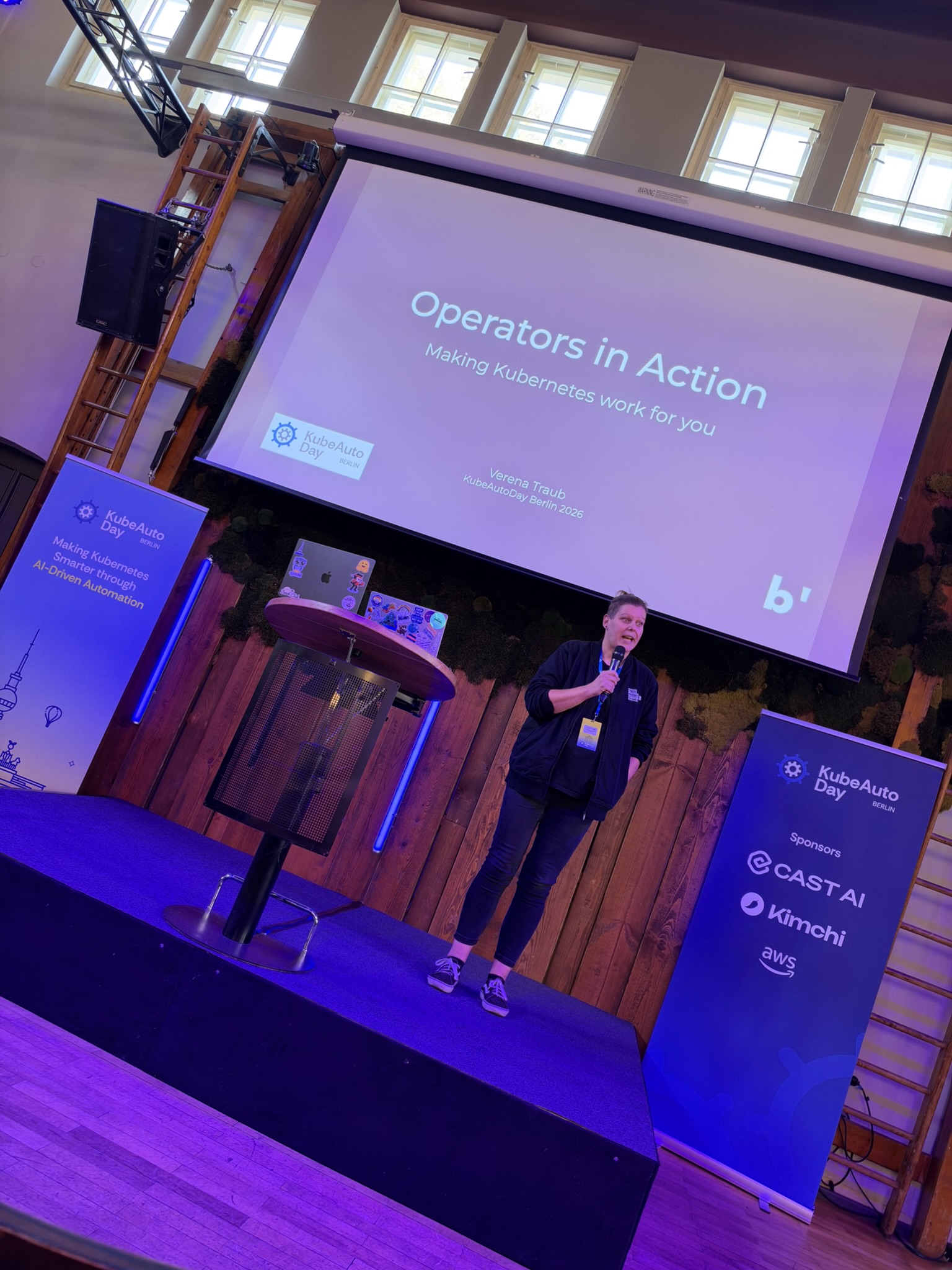
The invitation to speak at this conference came with a special challenge: Is it possible to give your talk in 15 min instead of 30? And what shall I say - challenge accepted and completed.
But that wasn’t quite enough pressure for one afternoon - Kadir Keles introduced me by mentioning that my talk was his favourite talk at this year’s KubeCon. Well, thanks, Kadir. No pressure at all. 😂
But the talk went really well, and I finished right on time - with plenty of smart questions during the networking afterwards. I couldn’t have hoped for more. :)
AI everywhere…
What KubeAuto Day managed super well was actually the mix of fast-paced 15 to 20 minute talks - different people, different companies, different challenges - but still one thing that stood out: How much AI has become part of the conversation around cloud-native infrastructure.
Adi Shacham-Shavit kicked things off with the idea that a platform is ultimately a bet on the business, not just a collection of best practices. Building a platform that supports AI workloads is one thing; figuring out what the business actually needs from it is another.
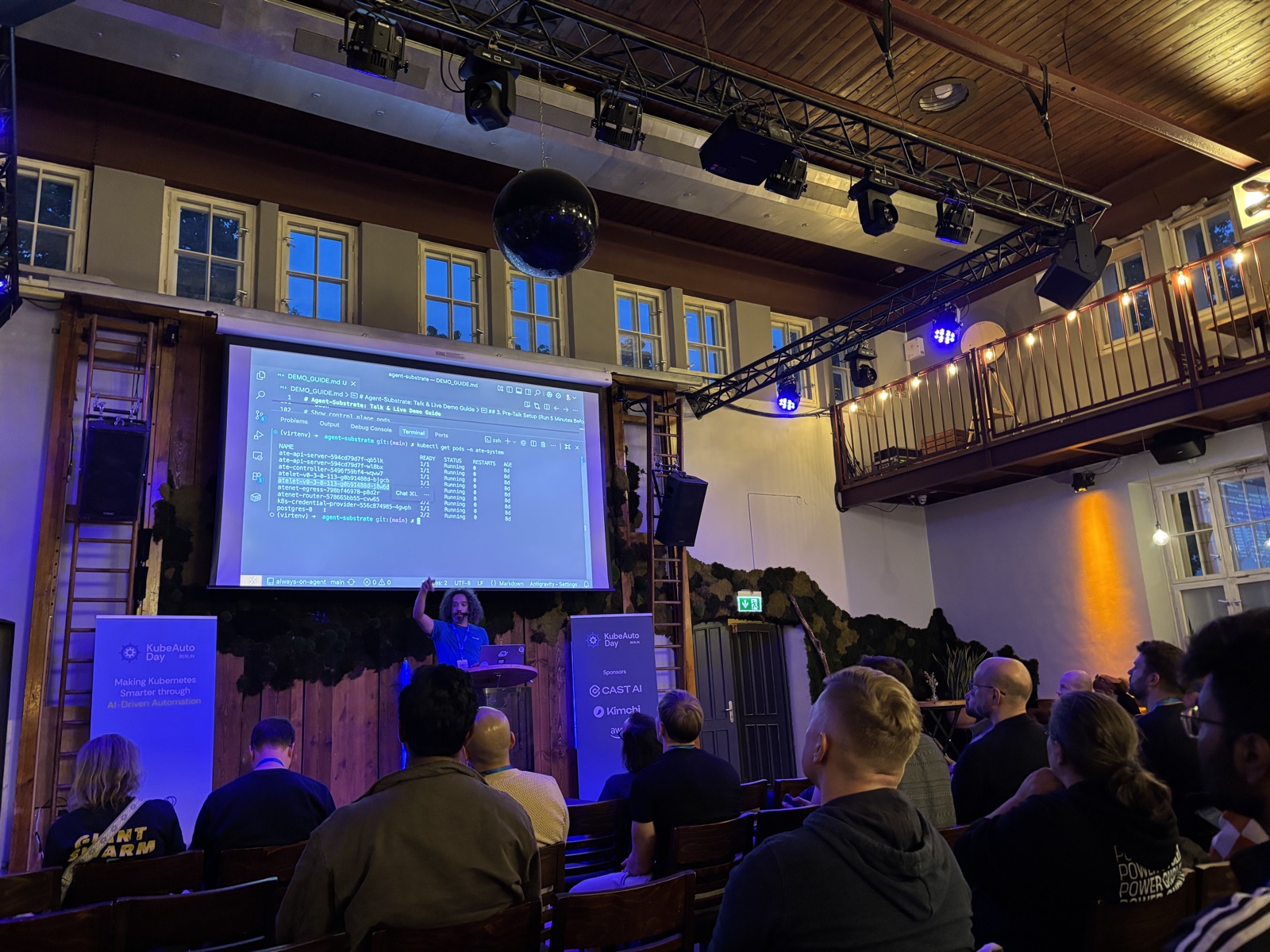
Later, Dominik Schmidle and Abdel Sghiouar explored different aspects of running AI agents on Kubernetes. From giving agents the right identities, permissions, and guardrails to finding better ways to run large numbers of agents without wasting resources, there was plenty to think about.
Kim-Norman Sahm brought another practical perspective to the table: AI coding agents don’t just generate code. They can also generate cloud bills. And if you’re not careful about where that code runs and which models it uses, both your budget and your data boundaries can become a problem.
The panel discussion on the future of DevOps and platform engineering in the AI era tied many of these questions together. One comparison particularly stuck with me: we’re a bit like kids who have just received a new toy but haven’t quite figured out what to do with it yet.
… almost
But there were also two talks without an AI focus. Ali Alp demonstrated why ticking all the Kubernetes security checkboxes doesn’t automatically make a workload secure. Even with restrictive settings in place, there can still be ways for an attacker to exploit what remains accessible. A good reminder that security checklists are useful, but understanding your actual threat model matters just as much.
And then there was my talk about Kubernetes Operators, reconciliation loops, and automating application deployments.
AI everywhere - just not in our talks. ;) And I actually enjoyed that contrast. AI is an important topic, and it’s fascinating to see how quickly it’s finding its way into our world. But Kubernetes still has plenty of challenges that don’t require an AI angle to be interesting. Sometimes, you just need to make your workloads behave. Or stop someone from breaking your cluster. ;)
And what about the cloud bill?
Not everything was about AI, of course. There was also plenty of attention on a challenge that anyone running Kubernetes at scale will recognise: making sure we’re using our resources efficiently.
Emrullah Acar and David Pollack shared insights into workload placement across more than 450 clusters, including the trade-offs involved in packing workloads more tightly. Because fitting more workloads onto fewer nodes sounds great until you run into the consequences of getting that balance wrong.
Thomas Bähr and Michael Walorski shared their experience with Kubernetes rightsizing at DKB, showing how a small team can use automation to make meaningful savings.
These talks were a nice reminder that operating Kubernetes isn’t just about getting applications running. It’s also about making sensible decisions about the resources they consume - and what those resources cost. Because someone still has to pay the cloud bill. ;)
The people make the event
As always, the talks were only part of what made the day special. It was lovely to catch up with familiar faces, finally meet some people in person, and get to know new folks from the community. And, of course, there were all the great conversations in between.
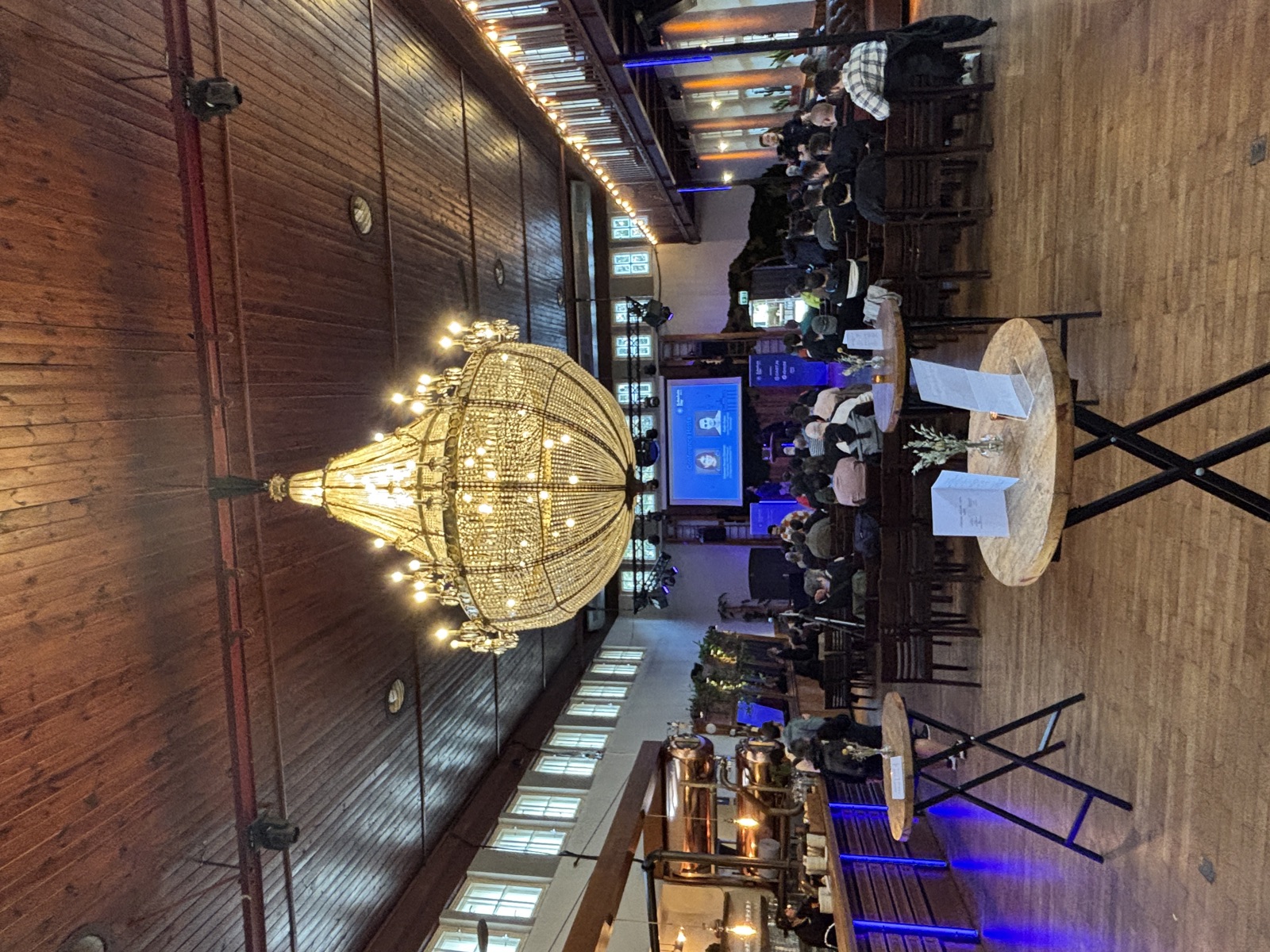
The venue, Alte Turnhalle, was amazing, too. Here are a few impressions from the location and the talks:
Summing up
KubeAuto Day was a wonderful afternoon and evening with interesting talks, different perspectives on the future of cloud-native infrastructure, and, most importantly, great people.
From Kubernetes Operators to AI agents, from security to workload optimization, there was plenty to think about. And perhaps the biggest takeaway was that, while AI is changing how we work with infrastructure, many of the underlying challenges haven’t gone away. We still need reliable automation, thoughtful architecture, sensible security, and a good understanding of what we’re actually trying to achieve.
A thousand thanks to everyone at Cast AI and beyond who helped make it happen. Already looking forward to the next one! 💜